

Where Do You Find Preloved Designer Clothes Near You?
Last Updated: November 12, 2026
Quick Summary
You find preloved designer clothes near you through consignment boutiques and curated resale shops, or by shopping online with sellers who publish measurements, condition notes, and photographs of actual flaws. Compare local sources on sourcing model, authentication, condition grading, return policy, and appointment requirements before you travel.
- The U.S. secondhand apparel market grew 13%, nearly four times faster than broader retail clothing.
- Consignment shops sell on behalf of owners and split proceeds; curated resale selects inventory around a defined point of view.
- Nearly three in ten Americans would consider buying secondhand clothing through a brand's own resale service.
- Check seams, lining, underarms, and hem before price when inspecting used designer clothes in person.
- Build a capsule with two structured pieces, one neutral layer, and one print or color piece.
Table of Contents
- Why Preloved Designer Clothes Near You Are Worth the Search
- Consignment Boutiques and Curated Resale: What to Expect Locally
- Shopping Second Hand Designer Clothes Online Without the Guesswork
- How to Authenticate Secondhand Designer Clothes Before You Buy
- What to Check When Buying Used Designer Clothes in Person
- Building a Capsule Wardrobe from Preloved Designer Clothes
- Browse the LaliSimone Collection for Your Next Find
- Frequently Asked Questions
Why Preloved Designer Clothes Near You Are Worth the Search
The U.S. secondhand apparel market grew 13%, nearly four times faster than the broader retail clothing market's 3.6%, according to ThredUp's 2026 Resale Report. That gap tells you something: women with real style knowledge are no longer treating resale as a compromise. They are treating it as the smarter first stop.
At LaliSimone, we built our entire collection around that shift. Preloved designer clothes near you are worth the search because the pieces carry provenance, construction, and design you cannot find on a contemporary rack at the same price.
Here is what most guides get wrong: they treat local resale as a treasure hunt with no method. Below, we break down how consignment boutiques, curated resale, and online shopping actually differ, how to authenticate a piece before you pay, and how to fold secondhand into a working capsule wardrobe.
University of North Texas research on recommerce in global fashion retail examined how resale is reshaping fashion retail from the inside, interviewing eight industry experts on the shift.
Consignment Boutiques and Curated Resale: What to Expect Locally
Consignment boutiques and curated resale shops both sell previously owned designer clothing, but they select very differently. A consignment shop accepts pieces from individual sellers and splits the proceeds; a curated resale source chooses inventory around a defined point of view.
Most local listings tell you a shop exists. Few tell you how it actually operates.
Consignment is a model where a shop sells on behalf of the owner and shares the selling price with them. If you have designer pieces sitting unworn, consignment is a straightforward way to move them into someone else's wardrobe.
Curated resale tends to run narrower and sharper. You will see fewer racks, but each piece earns its place. Expect a mix of high-end luxury labels and independent designers rather than a wall of anonymous brand-name merchandise.
How Curated Inventory Differs from a Standard Thrift Store
A standard thrift store sorts by category and volume. A curated collection sorts by design merit. That means you are less likely to dig through forty polyester blouses to find one good jacket, and more likely to find a single Celine wool pleated A-line skirt cut from 100% wool with a satin lining and made in France.
Condition grading is the other divide. Our Celine wool pleated A-line skirt is listed as Good Condition with brown specks on the front and a dry-cleaning recommendation.
Comparing the Shops Near You
Use this as the checklist you run against each local source before you commit a Saturday to it. The specifics vary by shop, so confirm them directly, but the categories are consistent.
| What to Compare | Why It Matters | What to Ask or Check |
|---|---|---|
| Sourcing model | Tells you whether inventory is seller-driven or stylist-selected | Is stock consigned, donated, or curated? Who selects it? |
| Authentication | Determines your recourse if a piece is not genuine | Do they authenticate in-house? What is the guarantee? |
| Condition grading | Sets expectations before you travel | Is there a written grade and are flaws photographed? |
| Return policy | Your protection if a piece does not work | What is the window, and does it cover secondhand flaws? |
| Appointment and access | Affects whether you can browse or must book | Walk-in or by appointment? Hours, parking, transit, pickup? |
| Inventory freshness | Tells you how often to check back | How often does new stock land, and are sizes listed online? |
A common pattern is that consignment shops lean on appointment-based intake and in-store browsing, while curated resale sources publish measurements and condition notes online so you can filter before you visit. Neither is better in the abstract. The point is to know which model you are walking into.
Best for: building a considered wardrobe rather than filling gaps cheaply. Skip if: you enjoy the randomness of a deep-dig thrift run.
Shopping Second Hand Designer Clothes Online Without the Guesswork
Shopping for second hand designer clothes online works when the listing gives you measurements, condition notes, and photographs of the actual flaws. Without those three things, you are guessing, and guessing is how people end up with a bag that looked pristine on screen and arrived with a stain.
Nearly three in ten Americans (29%) say they would consider buying secondhand clothing through a brand's own resale service, according to YouGov's 2026 survey on secondhand buying. That preference for a known seller over an anonymous listing is not snobbery. It is risk management.
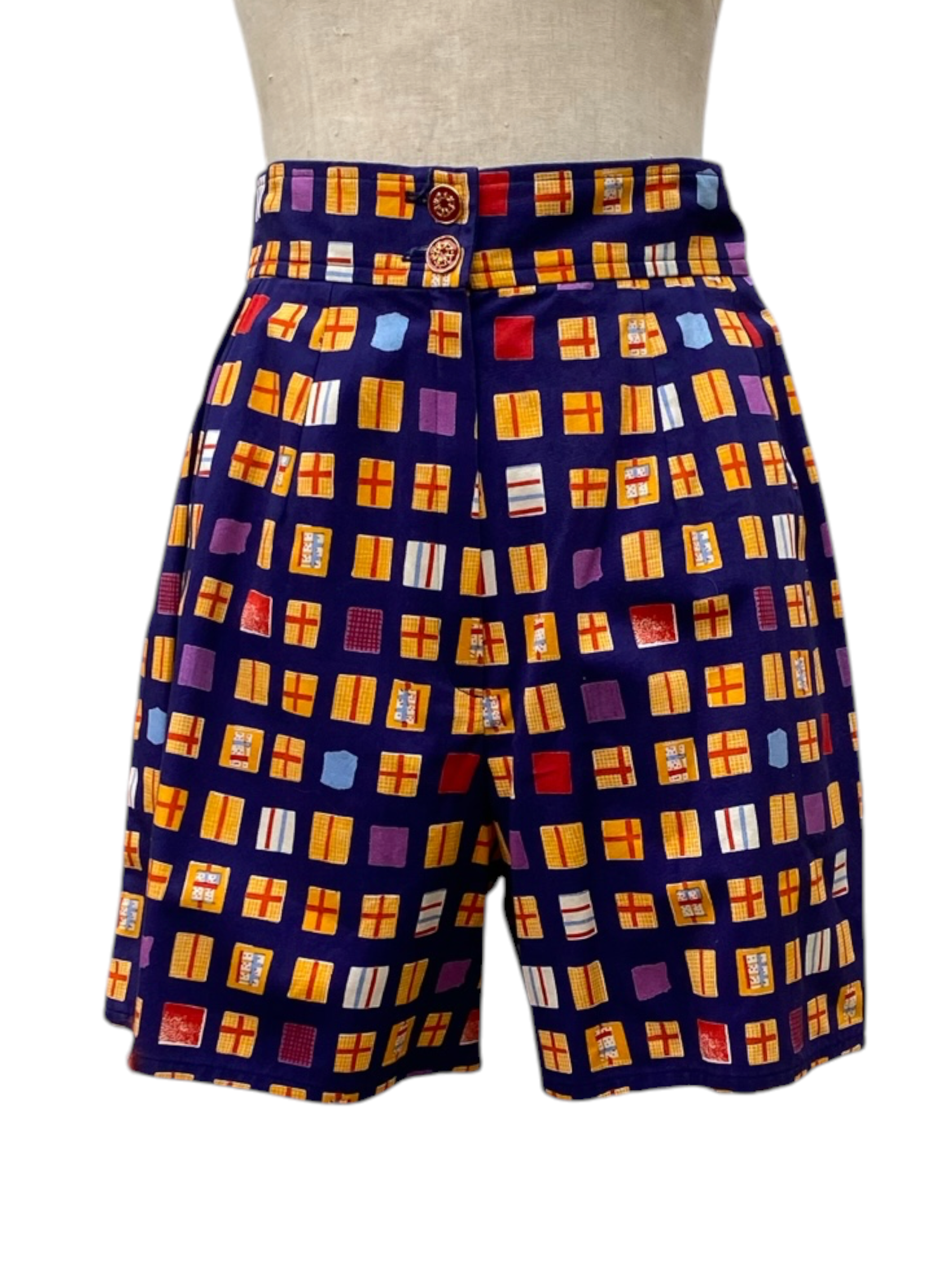
What most guides miss is that measurements matter more online than in person. A tag size tells you almost nothing across decades and countries. Our Christian Lacroix novelty print shorts are a French size 40, and the listing gives a 26-inch waist, 42-inch hip, and 4½-inch inseam. Read those numbers against a garment you already own and love.
How to Authenticate Secondhand Designer Clothes Before You Buy
Authentication of secondhand designer clothes comes down to construction details that counterfeiters rarely get right: stitching consistency, hardware weight and engraving, label attachment, and fabric hand. You do not need to be an expert to check the basics, but you do need to slow down.
Start with the label. Interior labels on designer pieces are attached with even, tight stitching and clean edges. A label that sits crooked, puckers the fabric, or uses a font that looks slightly off is a warning sign.
Fabric is the third check. A 100% wool piece should feel like wool, and a 100% cotton piece should feel like cotton. Blended claims on the label that do not match the hand of the fabric deserve a second look.
- Ask for the interior label photograph, not just the exterior
- Confirm the seller states condition flaws in writing
- Prefer sellers who publish measurements rather than tag sizes alone
A seller willing to show their work is the starting point for trust. If a listing dodges questions about labels or provenance, walk away.
What to Check When Buying Used Designer Clothes in Person
When buying used designer clothes in person, check the seams, the lining, the underarms, and the hem before you check the price. Those four areas show wear faster than anywhere else, and they are the areas photographs most often hide. The inspection is half the visit. The other half is the logistics that decide whether the trip is worth making at all.
Inspecting the Piece
Turn the garment inside out. Look at the seam allowances for fraying and the lining for pulls or staining. Hold it up to the light to see thinning at the elbows and knees. Then check the closure: zippers should run smoothly, and buttons should be original. A replaced button is not a dealbreaker, but it is a negotiation point.
Try it on if you can. Vintage and preloved sizing runs differently from contemporary sizing, and a garment that measures correctly can still sit wrong through the shoulder. Our 1980s Gauguin art print skirt is listed with its waistband elastic having lost its stretch.
Planning the Visit
The practical details are where local shopping quietly goes wrong. Most shop pages list a few of them and leave the rest to a phone call.
- Hours and appointment requirements. Confirm whether a shop is walk-in or by appointment before you travel.
- Parking and transit. Check for nearby parking or transit before you go.
- Inventory freshness. Ask how often new stock lands.
Best for: anyone buying a statement piece they intend to keep for years. Skip if: you need something wash-and-wear with zero maintenance.
Building a Capsule Wardrobe from Preloved Designer Clothes
A capsule wardrobe built from preloved designer clothes works because older designer pieces tend to be better constructed, which means they survive repeated wear. The goal is not a museum of eras. It is a working closet where a 1980s skirt sits beside a contemporary dress without either looking costumed.
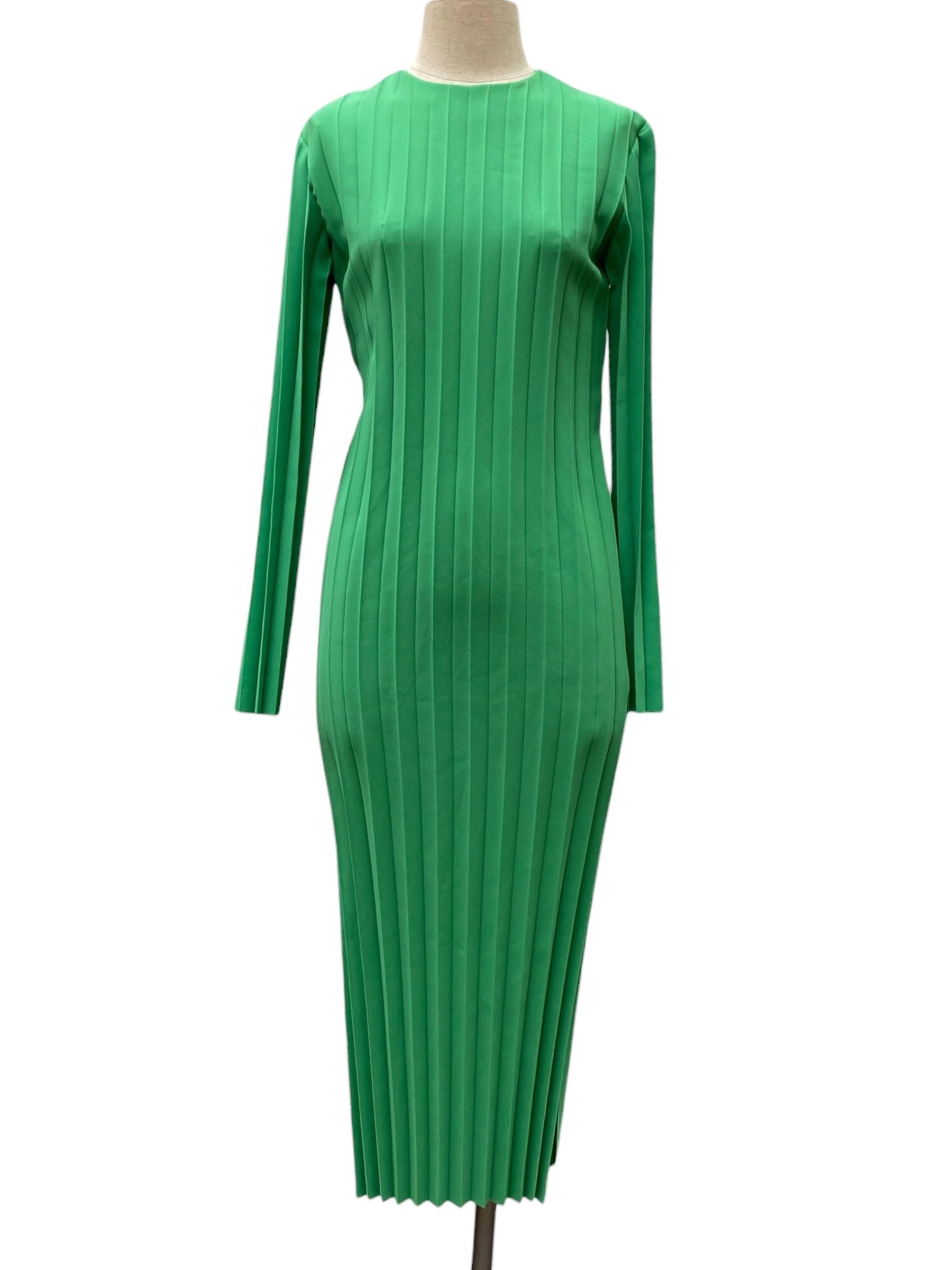
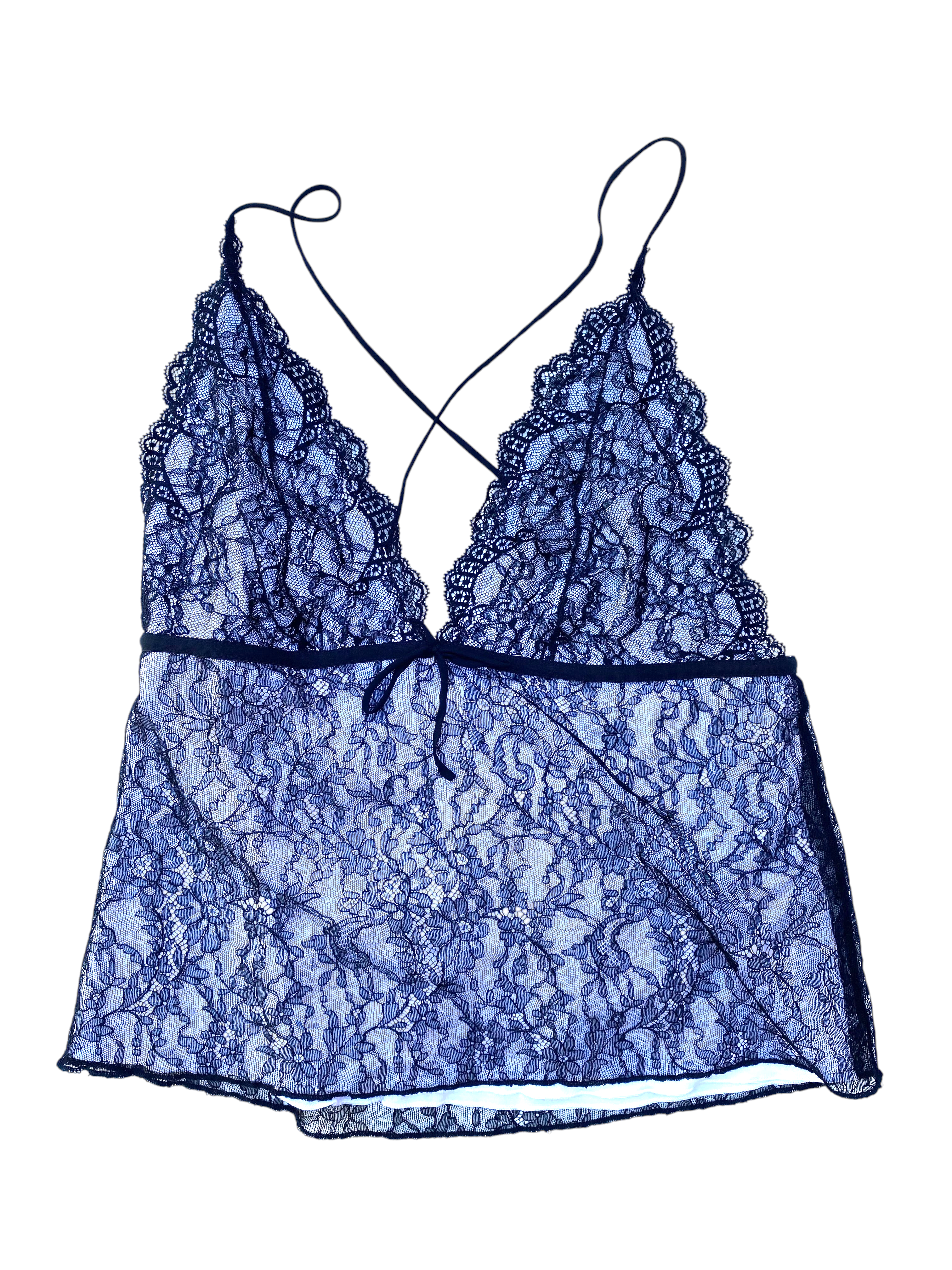
Start with the pieces that do the most work. Our A.W.A.K.E. MODE dress is a column of kelly green with knife pleats running shoulder to hem, contemporary rather than vintage, and it layers under a coat for winter without losing its line. Add a layering piece next, like the Ralph Lauren Black Label camisole in black lace and cotton blend, which sits under a blazer or stands alone in summer.
Then let one print or one era carry the personality. A single art-print skirt or a pair of novelty shorts does more for a capsule than five neutral basics. For a full method, including how to balance staples against statement pieces, see our guide to building a sustainable capsule wardrobe.
- Choose two structured pieces you can wear to work
- Add one layering piece in a neutral
- Include one print or color piece for personality
- Check every measurement against something you already wear
- Repair before you replace; a hem is cheaper than a new dress
Sustainability here is quiet, not a lecture. For the fuller case, see how secondhand fashion protects the planet. Buying preloved keeps well-made clothing in circulation, and that is reason enough.
Browse the LaliSimone Collection for Your Next Find
The best way to find preloved designer clothes near you is to start with a source that shows its condition notes, publishes real measurements, and selects with a point of view.
If you have been burned by listings that oversold condition, our approach is to describe condition notes and list measurements so you can compare against a piece you already own.
Browse the Capsule One regenerative vintage collection to see how the pieces work together, or check new arrivals to see what has just landed. If you have designer pieces you no longer wear, consignment is a place to start.
The challenge is not finding secondhand designer clothing. It is finding a source you can trust with your money and your wardrobe. We built LaliSimone to be that source, with stylist curation, honest condition grading, and provenance you can check before you commit.
Frequently Asked Questions
Where can I find second-hand luxury clothes near me?
Start with local consignment boutiques and curated resale shops, which vet inventory for condition and authenticity before it reaches the floor. Curated online sellers may let you browse by designer, size, and era. LaliSimone's stylist-curated collection includes pieces like the Celine wool pleated A-line skirt and the A.W.A.K.E. MODE dress.
How can I check whether a secondhand designer item is authentic?
Compare the label, hardware, and stitching against known examples of the same era. Look for consistent font and spacing on the label, even stitch density, and hardware that feels solid rather than plated. Ask the seller for close-up photos of the interior tag, serial markings, and any zipper pulls. Sellers who document condition and provenance in the listing give you a useful signal to weigh before you buy.
Is it better to shop for designer resale online or in person?
It depends on what you need to inspect. In person you can feel the fabric, check seams, and try the fit, which matters for structured pieces like wool skirts. Online gives you a wider size and designer range, and curated sellers photograph flaws and note measurements. Many buyers do both: browse online to learn the market, then visit a local boutique for pieces where fit and hand-feel decide the purchase.
What should I look for when buying used designer clothes?
Check the condition notes first, then the measurements. Look for seam stress, missing buttons, stretched elastic, and discoloration at the underarms or hem. Confirm the fabric content and whether the piece needs dry cleaning. Ask whether the item has been altered. A listing that names its flaws, like the seam unraveling noted on the A.W.A.K.E. MODE dress, is more trustworthy than one that claims perfection.
